
Posterior SI joint fusion
SiLO TFX™
A transfixing SI joint fusion system designed to stabilize the sacrum and ilium through a posterior approach.
- Posterior approach
- Single incision site
- Three points of fixation
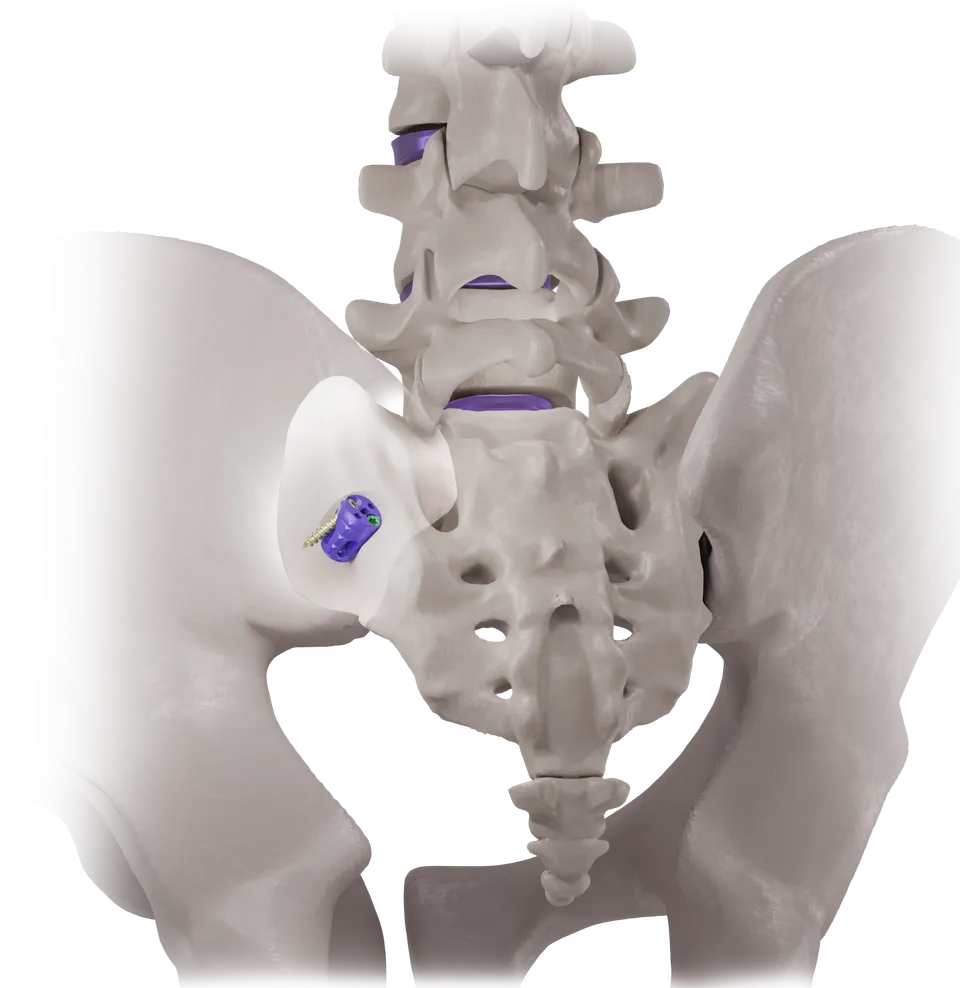
Where the pelvis meets the spine
Understanding the sacroiliac joint
The sacroiliac joints sit between the sacrum and the ilium bones on each side of the pelvis. Strong ligaments connect them, and together they help transfer the upper body’s weight through the pelvis.
SI joint pain can be associated with injury to surrounding ligaments, prior spine surgery, differences in leg length or pelvic structure, pregnancy and postpartum changes, infection, inflammation, or ankylosing spondylitis.
A focused evaluation matters
Symptoms from the SI joint can overlap with lumbar spine, hip, and nerve conditions. Physical examination, provocative testing, imaging, and sometimes diagnostic injections may help identify the pain source.
Recognizing the pattern
Symptoms that can occur with SI joint pain
These symptoms do not establish a diagnosis. A clinician must determine whether the SI joint or another structure is responsible.
01
Lower back, hip, or buttock pain
Pain may be felt near the lower back, hips, or buttocks and is often more noticeable on one side.
02
Pain into the leg
Symptoms may radiate from the pelvis toward the thighs, knees, or feet.
03
Pain with transitions
Standing up, sitting down, getting out of bed, or getting out of a vehicle may worsen symptoms.
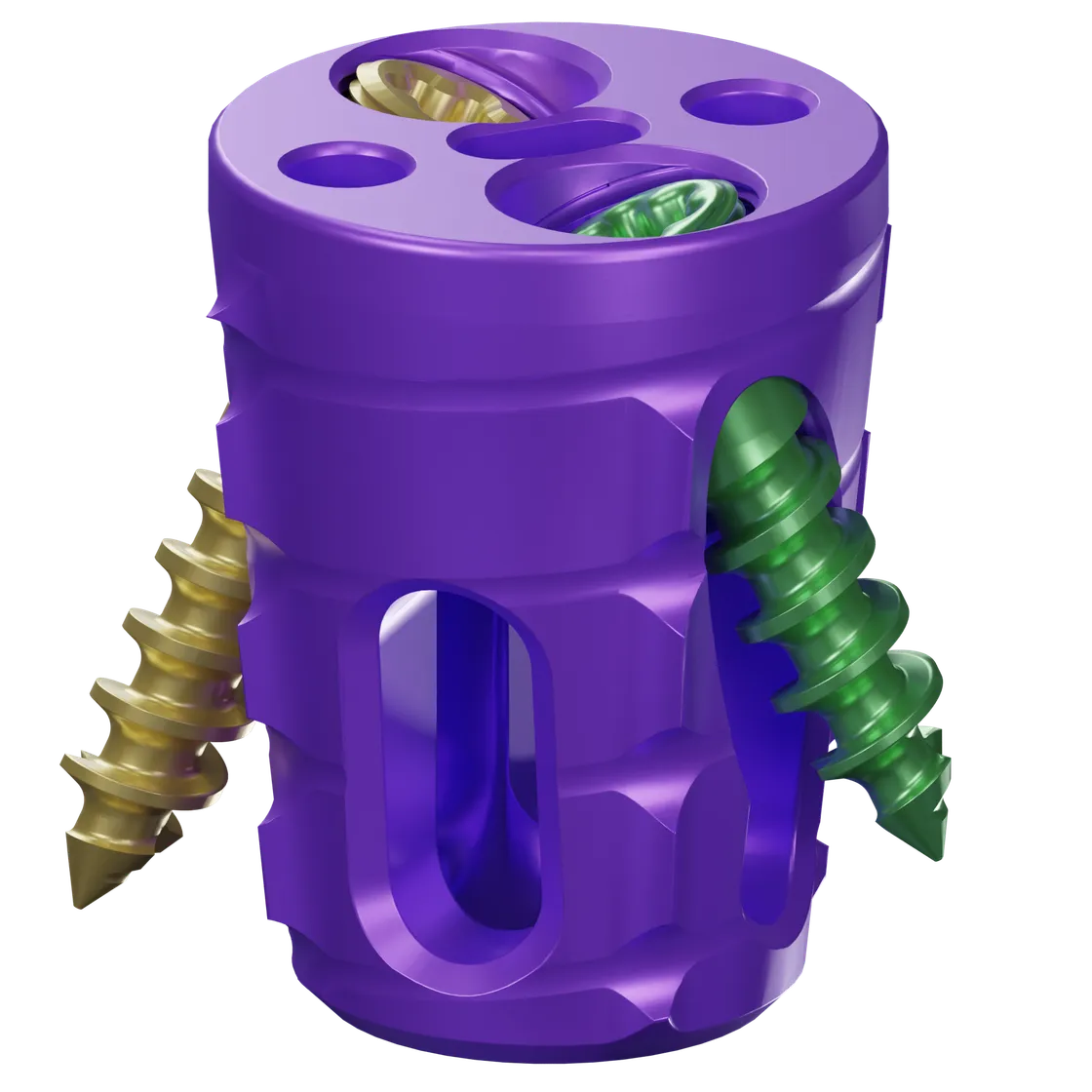
The transfixing SI joint fusion system
How SiLO TFX is designed
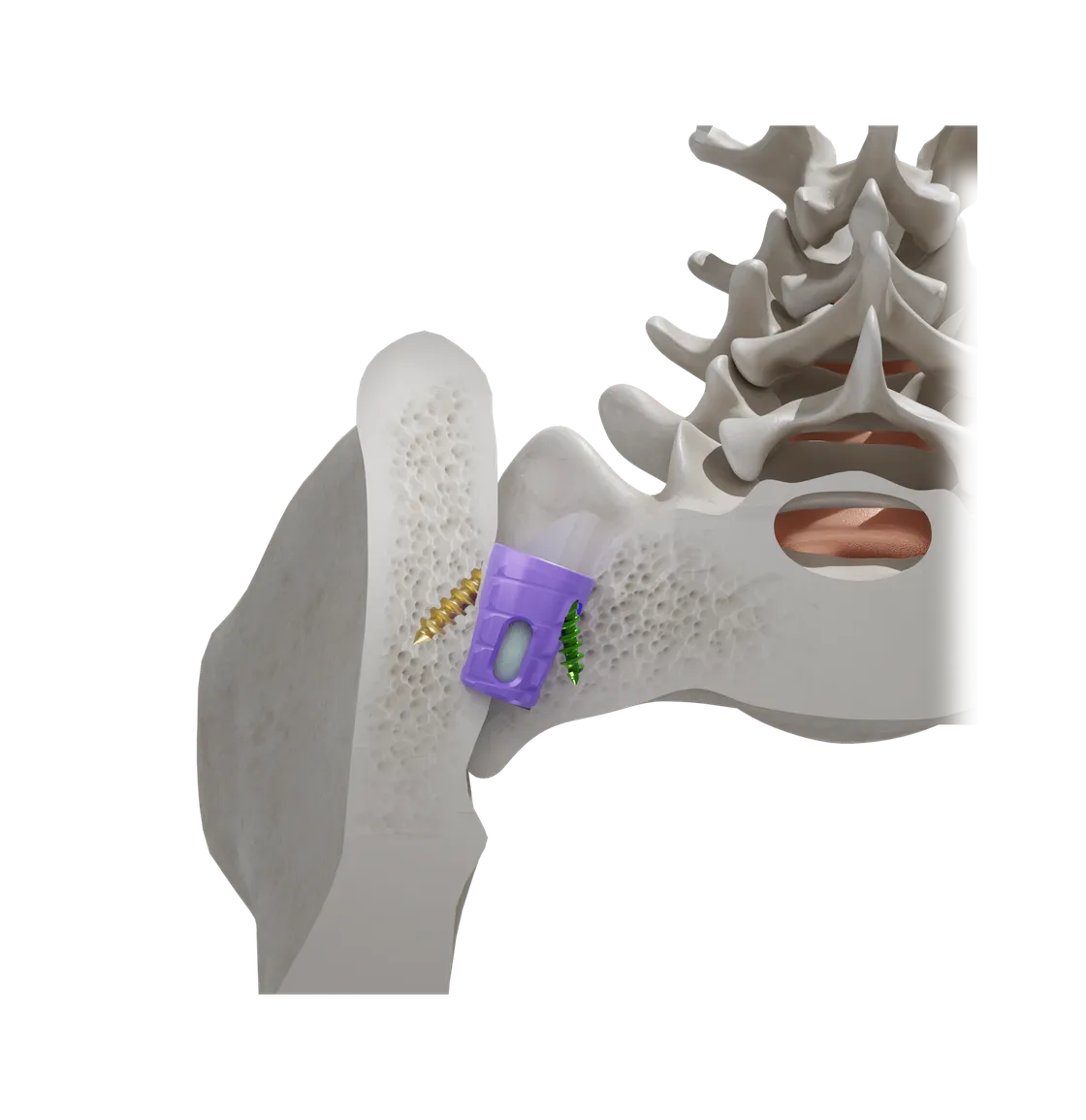
Aurora describes the SiLO TFX Transfixing Bridge as a titanium-alloy implant with a hollow, conical barrel and lateral openings that allow bone-graft material to promote fusion.
Two holes accept transfixing screws through the sacrum and ilium. Together, the bridge and screws are designed to provide three points of fixation across the joint.
Procedure overview
A posterior approach to SI joint fusion
The supplied material describes a single posterior incision and a construct that bridges the SI joint. Your physician will explain diagnosis, preparation, anesthesia, imaging, graft material, fixation, recovery, alternatives, and risks.
01
Prepare the joint
The joint surfaces are prepared according to the surgical plan.
02
Add graft material
Bone-graft material is placed to support the fusion process.
03
Place the bridge
The transfixing bridge spans the sacrum and ilium.
04
Secure fixation
Two screws create the manufacturer’s three-point construct.
Manufacturer education
See the SiLO TFX procedure
Aurora supplied both a patient animation and a more detailed surgical-technique animation.
Patient animation
A patient-oriented overview of the SiLO procedure.
Surgical-technique animation
A detailed procedural animation supplied by Aurora Spine.
Approved patient resources
Learn more about SiLO TFX
Aurora supplied English and Spanish patient brochures along with its current public product page.
PDF · English
Patient brochure
Download Aurora’s English-language SiLO TFX patient brochure.
PDF · Español
Folleto para pacientes
Descargue el folleto de información para pacientes en español.
Web
Aurora SiLO TFX page
Review Aurora’s current public information about the SiLO TFX system.
Individualized evaluation
Could the SI joint be contributing to your pain?
A focused evaluation can help identify the pain source and clarify whether fusion or another treatment may be appropriate.
Important information
This information is intended to be general and does not represent medical advice or recommendations. Evaluation and examination by a physician are necessary. Aurora’s patient brochure warns that use of the implant has potential limitations; patients should see the package insert for complete information. U.S. law restricts these devices to sale by or on the order of a physician.
Procedures and implants carry risks, and individual results vary. Your physician should explain potential benefits, risks, alternatives, and recovery expectations for your condition.
SiLO and SiLO TFX are trademarks of Aurora Spine. Rx only.